If you’re stocking an office break room, outfitting a collaborative workspace, or replacing a tired unit in your executive suite, one question comes up more often than you’d expect: “What’s the weight capacity of an office sofa?” As a sofa supplier who’s worked with small business owners, corporate facilities managers, and interior designers for over a decade, I’ve lost count of how many times that line has stopped a client mid-browse. It’s not a trivial detail. A sofa that can’t hold its intended use isn’t just a hassle—it’s a safety risk, a waste of budget, and an unnecessary headache for your team. Let’s break down what you actually need to know, how we test our units, and why a number on a spec sheet matters more than you think. Office Sofa

First, let’s clear up a common misconception: weight capacity isn’t a one-size-fits-all number. When we talk about an office sofa’s load rating, we’re not just measuring how much a single person can sit on it—we’re accounting for a combination of factors that make office use different from home use. At our company, we design sofas for spaces that see daily, high-volume use: a break room where three people might pile onto a two-seater during lunch, a lobby where visitors lean on the arms or shift their weight back and forth while waiting, or a collaborative nook where teams might prop their feet up (intentionally or not) between meetings. That’s why our testing doesn’t stop at a static weight test for the seat cushions; it’s a series of assessments that mirror real office behavior.
Let’s start with the core structure, because that’s where the capacity is decided. The frame is the skeleton of any sofa, and for office use, we only work with high-quality, kiln-dried hardwood—never particleboard, MDF, or thin metal frames that warp or bend over time. Kiln-dried hardwood is dried to a consistent moisture level, so it doesn’t swell in humid offices or shrink in heated winter spaces, both of which weaken the frame over time. We test frame strength by applying a static load of 1,500 pounds distributed evenly across the entire sofa for 24 hours; if there’s any bend, crack, or shift in the joints, that unit doesn’t leave our factory. For comparison, a standard residential sofa might only need to pass a 1,000-pound static test, but office use demands more durability. That extra frame strength is what allows us to back our units with a 10-year structural warranty, a detail many budget suppliers skip.
Next, the seat support system. This is what transfers weight from the cushions to the frame, so it’s just as critical as the frame itself. Most office sofas use either sinuous springs (the zig-zag metal wires you can see under the seat) or solid seat slats. Sinuous springs are flexible and give a bit of bounce, but cheap ones break easily with repeated use. That’s why our sofas use 12-gauge sinuous springs, spaced no more than 4 inches apart, and secured to the frame with corrosion-resistant metal clips. We test the spring system by cycling a 500-pound dynamic load (simulating a person sitting and standing repeatedly) 20,000 times—equivalent to about 5 years of daily use. Any springs that sag or break during that test are replaced before the sofa is packaged. For clients who prefer a firmer seat (great for high-traffic areas), we also offer solid oak slat supports, spaced 3 inches apart, which can hold even more weight without the slight give of springs. That flexibility lets us match the support system to your specific office needs, not just a generic spec.
Now, the seat cushions themselves, which are often a point of confusion for clients. The foam density of a cushion directly impacts how much weight it can support without deforming over time. A low-density foam (under 1.8 pounds per cubic foot) might feel soft at first, but it will compress down to half its original height within a year, especially if multiple people sit on it every day. That’s a costly replacement you don’t want in a commercial space. For our office sofas, we use a 2.2 to 2.8 pound density foam, with a 1-pound layer of softer memory foam on top for comfort. That density translates to a seat capacity of 300 to 350 pounds per seat, but again, that’s not a hard limit. We regularly test seats for dynamic load—cycling a 300-pound weight 100,000 times, which is about 25 years of regular use, and the cushion still bounces back to its original shape. The key here is that the capacity isn’t just a number you can’t exceed; it’s a guarantee that the sofa will perform the same way year after year, even with heavy use.
Wait, but what about the total weight capacity of the entire sofa? That’s another question we get a lot. A standard two-seater office sofa, for example, has a total structural capacity of around 800 to 1,000 pounds. That means you could have three average-sized adults (totaling around 550 pounds) sitting on it, plus a stack of folders or a few laptops, and the frame won’t bend or break. A three-seater goes up to 1,200 to 1,500 pounds, and even our compact office loveseats hold 500 to 600 pounds total. We design these numbers with office use explicitly in mind—no overestimating to impress clients, but also no underrating, because we know a busy break room can have people sitting in every seat, plus an extra one on the arm. I’ve seen too many budget sofas crack in half when a team of four tries to cram onto a two-seater, and that’s the last thing you want in a space where employees need to feel comfortable, not worried about breaking furniture.
Of course, there are factors that can affect a sofa’s capacity over time, even if it’s built to a high standard. How you maintain it matters, too. Spills, especially liquid that seeps into the frame, can weaken the wood over years. That’s why we cover all our upholstery with a stain-resistant, antimicrobial fabric that’s easy to wipe clean—another key detail for office spaces. Also, moving the sofa incorrectly (dragging it across the floor instead of lifting it) can loosen frame joints, which reduces capacity. We include instructions for safe moving with every sofa, and our installation team is always happy to help if you’re ordering multiple units for a new office buildout.
Now, let’s talk about what this means for your purchasing decision. If you’re outfitting a quiet executive lounge where only one or two people sit at a time, a lower-capacity sofa (around 250 pounds per seat) might be sufficient, as long as it’s built with a solid frame. But for a busy open workspace or a break room with 20+ employees on shift, you want to look for units with at least 300 pounds per seat and a total structural capacity of 800+ pounds. It’s worth noting that some suppliers list “max weight capacity” as a per-person number, but that doesn’t account for dynamic load or frame strength. Always ask for the test data, not just a number on a spec sheet. At our company, we provide full test reports for every sofa we sell, so you can see exactly how it performs under pressure.
I’ve been in this industry long enough to know that budget is always a factor, but cutting corners on weight capacity is a false economy. A $500 sofa that breaks after a year will cost you more in replacement fees, lost productivity, and employee frustration than a $1,200 sofa that lasts a decade. That’s why we build our office sofas to meet or exceed ANSI/BIFMA standards—the gold standard for commercial furniture in North America. BIFMA (the Business and Institutional Furniture Manufacturers Association) tests furniture for safety, durability, and performance, and all our units are certified to their standards. That certification isn’t just a label; it’s proof that the sofa you’re buying is designed to hold up to the rigors of daily office use.
If you’re still unsure about what capacity is right for your space, here’s a quick rule of thumb: add 100 pounds to the total weight of the people who will use the sofa most often. For example, if your team averages 180 pounds per person, a two-seater with a total capacity of 750 pounds will easily hold two people (360 pounds) with extra room to spare. If you have larger employees or often host guests who might sit in the sofa, bump that up to 850 or 900 pounds total to be safe. We also offer custom options for clients with unique spaces, like extra deep seats for team collaboration or wider frames for lobbies with high foot traffic.
At the end of the day, an office sofa isn’t just a place to sit. It’s a place where employees take their lunch break, where new hires wait for their orientation, where teams huddle to brainstorm, and where clients get their first impression of your company. A sofa that’s too flimsy, too small, or not built to last undermines that purpose. That’s why we put so much care into testing every unit, making sure the weight capacity is both accurate and reliable. We’ve seen clients come to us after buying cheap sofas that cracked, sagged, or broke within six months, and we work hard to make sure that’s not a mistake you have to make.
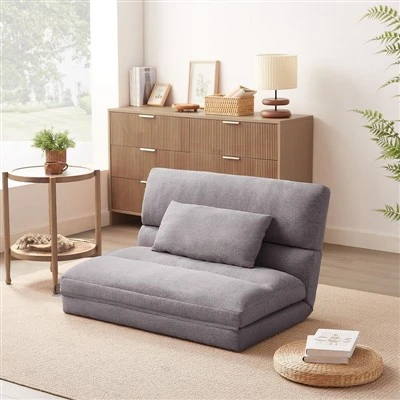
If you’re ready to shop for office sofas that fit your space, your budget, and your needs, don’t hesitate to reach out for a consultation. We’ll walk you through our different models, share test data, and help you pick the right capacity for your break room, lobby, or executive suite. Whether you need one loveseat for a small team or a full set of sofas for a 50-person office, we’re here to make the process smooth and stress-free.
Leisure Sofa References
- American National Standards Institute (ANSI) and Business and Institutional Furniture Manufacturers Association (BIFMA). (2020). BIFMA X5.1: General Purpose Office Furniture – Seating.
- Wood Technical Center. (2019). Kiln-Dried Hardwood for Commercial Furniture Applications.
- Foam Fabricators Association. (2021). Density Specifications for Commercial Seating Cushions.
- Office and Institutional Furniture Manufacturers Association. (2018). Durability Testing Protocols for Commercial Sofas.
Huizhou Ramson Technology Co., Ltd.
Huizhou Ramson Technology Co., Ltd. is one of the most professional office sofa manufacturers and suppliers in China, also supports customized service with low price. Please feel free to wholesale bulk classy office sofa from our factory. Contact us for pricelist.
Address: Building 3-4, Changlonggang Industrial Park, Tiantou Village, Shatian Town, Huiyang District, Huizhou City, Guangdong Province
E-mail: jscsofa@jsc-furniture.com
WebSite: https://www.jsc-sofa.com/
