When I first started as a supplier of Wall Partition C Stud and U Track materials back in 2012, I quickly learned that one of the most common questions potential customers ask is, “How much does this actually cost?” Over the past decade, I’ve answered that question thousands of times—from small contractors working on residential remodels to large commercial developers managing multi-story office buildings. The truth is, there’s no one-size-fits-all number. But after seeing every price fluctuation, material shift, and project variable firsthand, I can break down exactly what goes into calculating your wall partition C stud and U track costs, and what you can expect when working with someone who’s been in this game long enough to know the details. Wall Partition C Stud and U Track
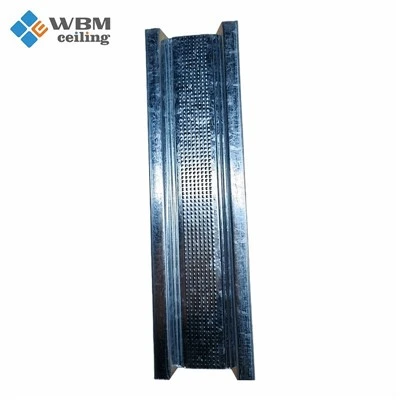
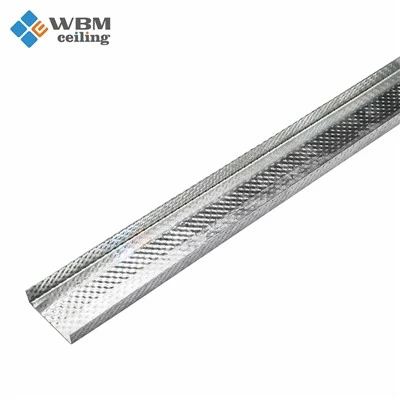
First, let’s get clear on the basics: C studs and U tracks are the backbone of most drywall partition systems. C studs are the vertical members that form the wall’s frame, while U tracks are the horizontal pieces that anchor the studs to the floor and ceiling. They’re made from galvanized steel, which is non-negotiable for durability and rust resistance—especially in spaces like basements, bathrooms, or commercial kitchens where moisture is a factor. Back when I started, most suppliers just gave a per-piece price, but now, every customer understands that price depends on a handful of factors that don’t show up on a generic quote. That’s where the confusion usually starts.
Let’s start with the biggest driver of cost: material grade and thickness. Not all galvanized steel is the same. For residential projects, where walls are typically light-duty, most customers go with 20-gauge steel. That’s the standard for homes, apartment units, and small offices because it’s lightweight enough to handle everyday use without being too flimsy. But for commercial spaces, especially those that will carry heavy loads—like walls that need to support cabinets, equipment, or multiple levels above contractors will almost always specify 18-gauge steel. And for high-traffic areas, or projects in regions with extreme weather, some even opt for 16-gauge. The difference in material cost here is noticeable. Right now, in 2024, 20-gauge C studs run roughly $1.10 to $1.40 per linear foot, while 18-gauge jumps to $1.50 to $1.90 per linear foot, and 16-gauge lands between $2.00 and $2.40. That’s not just a random markup—thicker steel requires more raw material, and manufacturing it demands more precision to maintain the structural integrity that commercial jobs need.
Next, length is a huge factor that many first-time buyers overlook. A stud that’s 8 feet long (standard for most residential ceilings) is way cheaper than a 12-foot stud, which is common in high-ceiling commercial spaces. Cutting steel to custom lengths also adds a cost—something I always make sure to note when quoting. If you order 100 pieces of 8-foot 20-gauge C stud, you’re looking at around $85 total for the studs alone, plus matching U tracks (which are usually the same gauge and length as the studs they’re paired with) at about $0.95 to $1.20 per linear foot. But if you need 12-foot studs, that same 100 pieces jumps to $120, not just 50% more—because longer steel rolls are more difficult to manufacture and transport without warping. I once had a customer who tried to cut down 14-foot 18-gauge studs to 10 feet to save money, and half of them bent during installation because the steel was too thin for the extra length after cutting. That’s the kind of mistake I see all the time, which is why I always emphasize ordering the exact length you need, even if it means a slightly higher per-piece cost upfront.
Then there’s quantity—something that makes every supplier’s quote look different. If you’re buying just a few pieces for a small DIY project, you’ll pay retail prices. But if you’re a contractor ordering thousands of linear feet, you’ll get wholesale pricing. That’s why I always tell customers: the more you buy, the lower the per-unit cost. For example, 1,000 linear feet of 20-gauge stud might cost $1.20 per foot, but order 10,000 linear feet, and that drops to $0.95 per foot. I’ve had repeat customers who’ve been ordering from me for years, and they get even better rates because we know each other’s needs. It’s not just about volume, either—it’s about reliability. A developer who orders consistent loads every quarter will get a better deal than someone who places one small order a year.
Another thing that affects cost is finish and treatment. Most C studs and U tracks are galvanized, which is the standard. But some customers—especially in coastal areas where salt air is common, or in food processing plants where cleaning chemicals are used—ask for a thicker galvanized coating, called G90 vs. G60. G60 is the basic galvanized coating, which works for most inland projects. G90 is 90 grams of zinc per square foot, which is much more corrosion-resistant. The difference in price between G60 and G90 is about 15 to 20%. For a small residential project, that might not be worth it, but for a commercial kitchen that will be hosed down weekly, it’s a cost that saves money on repairs later. I also offer pre-painted C studs for projects where aesthetics matter—like office partitions that will be left exposed. The paint adds a small premium, but it avoids the hassle of painting after installation, which is a big plus for contractors trying to stay on schedule.
Now, let’s talk about hidden costs that aren’t in the material price. First, shipping. Steel is heavy, so transporting it adds up. If you’re local to my warehouse, shipping might be $50 to $100 for a full truckload, but if you’re out of state, that can jump to $300 or more. That’s why I always recommend local suppliers for projects under 5,000 linear feet—shipping costs can erase any savings from a lower material price. I’ve had customers drive two hours to pick up their materials just to skip the out-of-state shipping fee, and I don’t blame them. I also include packaging costs in my quotes, which are minimal but necessary to prevent the steel from getting dented during transport. Dented studs are a nuisance—they don’t fit properly, and you have to discard them, so good packaging is worth the small extra cost.
Then there’s labor, which is tied to the material you choose. Thicker steel is stiffer, so it takes more effort to cut and install. A crew might take 10% longer to frame a wall with 18-gauge studs than 20-gauge, which adds to the labor cost. That’s why when I quote, I always tell customers to factor in both material and labor, because the cheapest material upfront might end up being more expensive overall if it takes longer to install. I once worked on a residential project where the homeowner bought the cheapest 22-gauge studs for a basement remodel, and the crew had to bend half of them to fit, leading to a week of delays and extra labor fees that cost more than the difference in material between 20 and 22 gauge. That’s a story I share with every new customer to help them make a smart choice.
I also want to address common misconceptions I hear all the time. Some people think that online retailers have cheaper prices than local suppliers, but that’s not always the case. Online retailers often have lower material prices, but their shipping fees are exorbitant, and if there’s a mistake in the order—like sending the wrong length or gauge—you have to pay to ship the wrong items back, which adds even more cost. When you work with me, I make sure to double-check every order before it leaves the warehouse, and if there’s a mistake, I fix it at no extra cost. That kind of customer service is something you don’t get from big box stores or online suppliers.
Another point: lead time. If you need materials in a hurry, you’ll pay a premium. Normally, a standard order takes 3 to 5 business days to ship, but if you need it in 1 or 2 days, I can arrange for expedited delivery, which adds about 20% to the total cost. I get it—construction schedules slip sometimes, and you need materials fast. That’s why I keep a stock of popular sizes and gauges in the warehouse, so I can fill last-minute orders without having to wait for steel to be manufactured. I once had a contractor who called me at 7 a.m. saying they needed 5,000 linear feet of 18-gauge studs for a job that was supposed to start at 9 a.m. I had the materials loaded on a truck and delivered by 8 a.m., which saved their job and kept them from paying a penalty for missing the deadline. Those are the moments that matter most, not just the price per linear foot.
Let’s put this all together with real examples, so you can see what a project might actually cost. For a small residential basement remodel—say, a 10×12 foot room partitioned off to be a home office—you’ll need about 80 linear feet of 8-foot 20-gauge C studs and matching U tracks. That would cost roughly $92 for materials, plus local shipping of $60, for a total of $152. For a commercial office project, a 100×50 foot open space with walls that are 10 feet tall, you’ll need about 5,000 linear feet of 10-foot 18-gauge studs and U tracks. That would be around $4,500 for materials, plus local shipping of $150, for a total of $4,650. That’s a big difference from the residential project, but it’s because of the thicker steel, longer lengths, and larger quantity.
I also work with specialty projects. For example, a restaurant that needs a grease-resistant partition near the kitchen. They need G90 galvanized 18-gauge studs, custom lengths of 10 feet, and pre-painted white for aesthetic purposes. The total cost for 2,000 linear feet would be about $2,500, including shipping. That’s higher than the standard commercial price, but it’s tailored to their specific needs, which is what a good supplier should do.
Now, I know price isn’t everything. The quality of the steel matters, too. Cheap steel might seem like a good deal, but it’s often made from lower-grade raw material that bends easily, rusts faster, and doesn’t meet building code requirements. That’s why I only sell galvanized steel that meets ASTM A653 standards—the industry standard for structural steel studs. I’ve had customers come to me after using cheap studs that failed inspection, and they had to rip out entire walls and start over, costing them thousands of dollars. Investing in quality C studs and U tracks upfront saves you from those headaches.
At the end of the day, the right price for your wall partition C stud and U track depends on your project’s specific needs. You can’t just look at a generic price list and pick the cheapest option. You have to consider the material gauge, length, quantity, finish, shipping, and even your timeline. That’s why I never give a one-size-fits-all quote—instead, I ask a few simple questions: What’s the project type? What length and gauge do you need? How many linear feet are you looking for? And when do you need it by?
If you’re planning a project and want a transparent, accurate quote, I’d be happy to talk through your needs. There’s no obligation, and I’ll break down every cost so you know exactly what you’re paying for. I’ve been in this business for over a decade, and I’ve worked on everything from small DIY projects to large commercial developments. I know the ins and outs of C studs and U tracks, and I’m here to help you make the best choice for your project, without hidden fees or confusing pricing.
Don’t let generic price charts or online quotes leave you guessing. Reach out today to discuss your wall partition C stud and U track needs, and we’ll put together a quote that fits your budget and timeline. Whether you’re a first-time homeowner, a small contractor, or a large developer, I’m here to provide quality materials and honest service every step of the way.
Machine References
- Steel Stud Manufacturers Association. (2023). Standard Specifications for Steel Studs and Tracks.
- International Code Council. (2022). Building Code Requirements for Steel Framing.
- Galvanizers Association. (2024). Corrosion Resistance of Galvanized Steel for Construction.
- U.S. Department of Commerce. (2023). Steel Market Report for Construction Materials.
Langfang Weikaihua Building Material Co., Ltd.
Langfang Weikaihua Building Material Co., Ltd. is one of the most professional wall partition c stud and u track manufacturers and suppliers in China, featured by quality products and low price. Please rest assured to buy discount wall partition c stud and u track from our factory. Contact us for customized service and free sample.
Address: Peng Er Wan Villiage, Zhao Ge Zhuang Town, Wen’an County, Langfang City, Hebei Province, China
E-mail: joyce@wbm.cc
WebSite: https://www.wbmceiling.com/
