Hey there! I’m a supplier of Tangential Flow Filtration (TFF) systems, and I get a ton of questions about how to pick the right system for a specific application. So, I thought I’d write this blog to share some tips and insights. Tangential Flow Filtration Systems
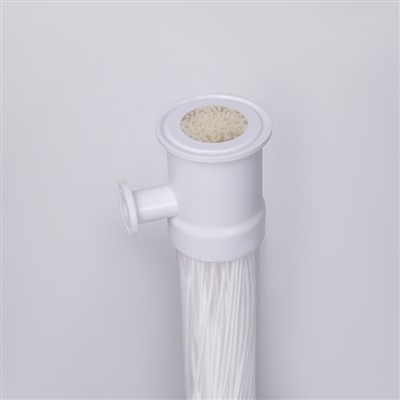
Understanding Tangential Flow Filtration
First off, let’s quickly go over what tangential flow filtration is. TFF is a powerful separation technique used in many industries, like biotech, pharmaceuticals, food and beverage, and more. Instead of forcing all the fluid through a filter like in traditional dead – end filtration, TFF lets the fluid flow parallel to the filter surface. This creates a continuous shearing action that helps prevent the build – up of solids on the filter, which means you can keep operating for longer periods without clogging up.
Know Your Application
The first step in selecting a TFF system is to really understand your application. What are you trying to separate? Is it proteins, viruses, bacteria, or something else? Different substances have different sizes and properties, and this will determine the type of membrane you need.
For example, if you’re working in biotech and you want to purify proteins, you’ll likely need a membrane with a specific molecular weight cut – off (MWCO). The MWCO is like a sieve size for molecules. If your proteins are around 50 kDa (kilo – Daltons), you’ll want a membrane with an appropriate MWCO, say 30 kDa or 100 kDa, depending on your specific purification needs.
Consider the Flow Rate
The flow rate is another super important factor. How much fluid do you need to process per unit of time? This depends on the scale of your operation. If you’re doing small – scale research in a lab, you might only need a system with a low flow rate, like a few milliliters per minute. But if you’re in a production facility, you could be looking at hundreds or even thousands of liters per hour.
Our TFF systems come in a range of flow rates to meet different needs. We can help you figure out what’s right for your application based on your production goals and the volume of material you’re working with.
Evaluate the Pressure Requirements
Pressure is also a key consideration. In TFF, you need to apply enough pressure to drive the filtration process, but not so much that you damage the membrane or the substances you’re trying to separate.
The pressure requirements are related to the viscosity of your fluid, the type of membrane, and the flow rate. Thicker fluids usually require more pressure to flow through the membrane. And different membrane materials can handle different pressure levels. For instance, some membranes are more robust and can withstand high pressures, while others are more delicate and need a gentler touch.
Think About Membrane Material
The membrane material is crucial. There are several types available, each with its own advantages and disadvantages.
- Polyethersulfone (PES): This is a popular choice because it has good chemical resistance, high flow rates, and low protein binding. It’s great for applications where you’re working with proteins or other biological molecules.
- Cellulose: Cellulose membranes are very biocompatible, which makes them suitable for applications in the pharmaceutical and food industries. They’re also relatively inexpensive.
- Polysulfone (PS): PS membranes are known for their mechanical strength and chemical stability. They can handle a wide range of pH values and are often used in industrial applications.
We offer TFF systems with different membrane materials, so you can pick the one that best suits your application.
Scale – Up and Scale – Down Considerations
If you’re in the research and development phase, you might start with a small – scale TFF system. But as your project progresses, you may need to scale up to a larger production system. It’s important to choose a TFF system that can be easily scaled up or down.
Our systems are designed with scalability in mind. We have modular components that allow you to increase or decrease the filtration area as needed. This means you can start small, test your process, and then smoothly transition to a larger – scale operation without having to completely overhaul your setup.
Cost and Maintenance
Let’s talk about money and upkeep. The cost of a TFF system includes not only the initial purchase price but also the ongoing costs of membrane replacement, cleaning chemicals, and energy consumption.
When it comes to maintenance, you want a system that’s easy to clean and operate. Our TFF systems are designed with user – friendly interfaces and simple cleaning procedures. We also offer training and support to help you keep your system running smoothly and minimize downtime.
Regulatory Compliance
In industries like pharmaceuticals and food, regulatory compliance is a must. You need to make sure that the TFF system you choose meets all the relevant regulations and standards.
Our systems are designed and manufactured to comply with international standards such as cGMP (current Good Manufacturing Practice) and FDA (Food and Drug Administration) requirements. We can provide you with all the necessary documentation to ensure that your production process is in line with regulatory guidelines.
Support and Service
Last but not least, you want a supplier who can offer you good support and service. Things can go wrong, and when they do, you need someone who can help you quickly.
We have a team of experts who are always ready to answer your questions, provide technical support, and help you troubleshoot any issues you might encounter. Whether it’s a problem with the system, a question about membrane selection, or advice on process optimization, we’ve got your back.
Conclusion

Selecting the right tangential flow filtration system for your specific application is a multi – faceted process. You need to consider factors like the nature of your substances, flow rate, pressure requirements, membrane material, scalability, cost, regulatory compliance, and support.
Formulation If you’re still not sure which TFF system is right for you, don’t hesitate to reach out. We’re here to help you make the best choice for your business. Whether you’re a small research lab or a large production facility, we’ve got the expertise and the products to meet your needs. Let’s have a chat and see how we can work together to solve your filtration challenges.
References
- "Tangential Flow Filtration Handbook" – Pall Corporation
- "Bioprocessing Technology: Principles and Practice" – Shuler and Kargi
- "Filtration in the Food and Beverage Industry" – Elsevier
Hangzhou Guidling Technology Co., Ltd.
Address: No.795, 18th Street, Qiantang New District, Hangzhou City, Zhejiang Province, China
E-mail: export1@guidling.net
WebSite: https://www.guidlingfiltration.com/
