If you’ve ever walked down the aisles of a grocery store, a convenience store, or a specialty bakery, chances are you’ve paused at a refrigerated display case—those sleek, glass-fronted units that hold your pre-made sandwich, that tub of artisanal ice cream, or the stack of fresh milk. As someone who’s spent the last decade designing, manufacturing, and selling these units to businesses across North America, I get asked one question more than any other: “Are there environmental regulations for refrigerated display cases?” Refrigerated Display Cases
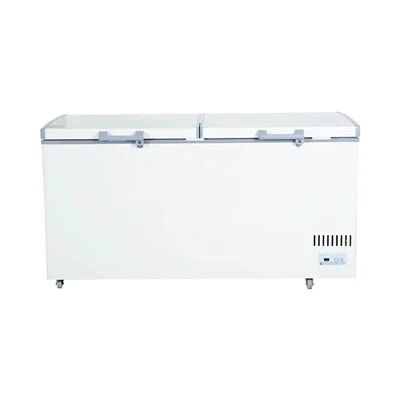
The short answer is yes. The long answer is that these regulations are one of the most important drivers shaping the work I do every day, and they’re not just red tape—they’re what push us to build units that work better for our customers, their bottom lines, and the planet. Let’s break this down, because it’s not as simple as one set of rules from one government.
To start, you have to understand what makes refrigerated display cases impact the environment. For anyone who doesn’t work in commercial cooling, the two big culprits here are global warming potential (GWP) and energy use. Traditional refrigerants used in display cases—think older hydrofluorocarbons (HFCs)—have GWP values that are hundreds or thousands of times higher than carbon dioxide, meaning even a small leak of these gases into the atmosphere contributes significantly to climate change. Then there’s how much electricity these units use. At my warehouse, we run tests that show a poorly designed display case can use up to 20% more energy than a well-built one, and for a store with 10 of these units running 12 hours a day, that adds up to thousands of dollars in annual utility bills and a lot of extra greenhouse gas emissions from power plants.
That’s why regulators around the world have been tightening rules on both refrigerant types and energy efficiency for the last 15 years. I first noticed a shift around 2015, when the U.S. Environmental Protection Agency (EPA) updated its standards under the Significant New Alternatives Policy (SNAP) program. Prior to that, many manufacturers still used HFC-134a, a common refrigerant with a GWP of 1,430—meaning one ton of HFC-134a leaking is equivalent to 1,430 tons of carbon dioxide entering the atmosphere. The 2015 SNAP rule phased out the use of high-GWP HFCs in new commercial refrigeration systems, including display cases, and required manufacturers to switch to lower-GWP alternatives.
But that’s just the U.S. At the same time, the European Union was rolling out its F-Gas Regulation, which went into even stricter effect in 2020. The EU’s rules set a cap on total HFC use across all industries, and for refrigerated display cases, they require that any new unit have a maximum GWP for its refrigerant of less than 150. For comparison, many of our standard units today use refrigerants like R-454A, which has a GWP of just 238, or even lower for some specialty cases. That’s a huge drop from the units I sold when I first started in this field, back when we could easily specify a unit with a GWP of 2,000 or more.
What I’ve learned over the years is that these regulations aren’t one-size-fits-all. For example, in California, the state has its own standards that are even stricter than the federal EPA rules. California’s Title 24, the Building Energy Efficiency Standards, requires refrigerated display cases to meet specific energy use thresholds that go above and beyond federal requirements, especially for units in grocery stores. I worked with a large grocery chain in Southern California last year that had to replace 40 older display cases in its Fresno location—they were running units that were 10 years old, well before Title 24’s 2019 update, so they qualified for a utility rebate to swap them out for newer, more efficient models. That’s a big part of why my team and I spend so much time training our sales reps on the different rules across states and regions; a unit that works perfectly in Texas might not meet compliance in Massachusetts, or vice versa.
It’s not just about new units, either. Many regulations also cover existing display cases, which is a common point of confusion for small business owners who might not have the bandwidth to keep up with these rules. For example, the EPA’s Section 608 of the Clean Air Act requires that any technician working on refrigeration systems that hold more than 50 pounds of refrigerant be certified, and that businesses keep records of refrigerant purchases and leaks. A lot of independent convenience store owners I talk to don’t know that if their display case leaks more than 15% of its refrigerant in a year, they have to repair it within 30 days—or face fines. Last year, we had a customer in Ohio who got a $1,200 fine because his old display case had a small leak that he didn’t even know about; he’d been using it for 12 years and had no idea the rule existed. That’s why we make it a point to include a compliance guide with every unit we sell, and to check in with customers after installation to help them understand what their local rules require.
But here’s the thing: these environmental regulations haven’t just made our products more compliant—they’ve made them better. When the EPA first rolled out the SNAP rules, a lot of manufacturers complained that switching to lower-GWP refrigerants would hurt performance, that the units would be less cold, or that they’d cost more to run. I was skeptical too, at first. But my engineering team spent six months testing different refrigerant blends and adjusting the insulation and compressor technology in our cases, and what we ended up with was a unit that not only meets all GWP requirements, but uses 12% less energy than our old models. For our customers, that translates to lower utility bills. For example, a grocery store with 15 display cases can save about $800 a year in electricity costs just by switching from a pre-2015 unit to one of our compliant models. That’s a win for their budget, and a win for the planet.
Another big part of these regulations that I don’t talk about enough is the end-of-life requirements for refrigerated display cases. Most people don’t think about what happens to a unit when it’s replaced, but many states now have laws that require refrigerant to be recovered and recycled, not just vented into the atmosphere when a unit is disposed of. For example, in New York, if a business throws away a refrigerated display case without having a certified technician recover the refrigerant, they can face fines of up to $11,000. That’s why my company partners with local HVAC and refrigeration services to offer free refrigerant recovery for any unit we sell, at the end of its life. It’s an extra step, but it’s part of being a responsible supplier, and it’s also what our customers expect from a partner, not just a vendor.
I will say, there are still gaps in how these regulations are applied, especially for small businesses. A lot of independent bakers or convenience store owners don’t have a sustainability team on staff, so they rely on manufacturers like us to help them navigate the rules. Last quarter, I had a conversation with the owner of a small specialty food shop in Portland, Oregon, who was nervous because his 8-year-old display case was coming up on its mandatory leak inspection. He couldn’t afford to replace it, and he was worried about getting a fine. We worked with our service partner to do a free inspection, found a small leak that only needed a $150 repair, and helped him fill out the required paperwork for the state. That’s the kind of work that matters more than just selling a unit; it’s making sure our customers understand the rules, so they don’t get caught off guard.
If you’re a business owner looking for refrigerated display cases, here’s what you need to know: first, don’t assume all units on the market are compliant. Many cheap, imported units don’t meet the latest GWP or energy efficiency rules, and if you buy them, you could face fines down the line. Second, work with a supplier who knows the local regulations in your area. We keep a running list of compliance requirements for every state in the U.S. and most provinces in Canada, so we can tell you exactly what you need for your specific location. Third, think long-term: investing in a compliant, efficient display case now will save you money on utility bills, avoid costly fines, and help you meet any future regulations that might come down the line.
At the end of the day, environmental regulations for refrigerated display cases aren’t just about following rules. They’re about building products that are better for our customers, our communities, and the planet. I’ve been in this business long enough to see how much these units have changed over the last decade—from big, clunky, energy-hungry units to sleek, efficient, low-emission cases that keep food fresh and don’t break the bank. That change is directly because of those regulations, and I’m proud to be part of a company that adapts, innovates, and puts those rules to work for our customers.
If you’re in the market for new refrigerated display cases, or if you have questions about compliance for your current units, I’d be happy to talk through your needs. We can work together to find units that meet all local environmental regulations, fit your space, and stay within your budget. The last thing I want is for a business owner to get hit with a fine because they didn’t know the rules, or to buy a unit that doesn’t work for their location. Let’s connect and figure out what’s right for your business.
References
Chest Freezer U.S. Environmental Protection Agency. (2023). Significant New Alternatives Policy (SNAP) Program.
California Energy Commission. (2022). Title 24, Part 6: Energy Efficiency Standards for Commercial Appliances.
European Commission. (2020). Regulation (EU) 517/2014 on Fluorinated Greenhouse Gases.
American Society of Heating, Refrigerating and Air-Conditioning Engineers (ASHRAE). (2021). Standard 72: Methods of Testing for Rating Refrigerated Display Cases.
Zhejiang Xingbao Electrical Appliances Co., Ltd.
As one of the most professional refrigerated display cases manufacturers and suppliers in China, we also support customized service. Welcome to wholesale bulk high quality refrigerated display cases in stock here from our factory. If you have any enquiry about pricelist, please feel free to email us.
Address: No. 10 Baisha Road, Lianhang Development Zone, Chang’an Town, Haining City, Jiaxing City, Zhejiang Province, China
E-mail: zjxingbao@gmail.com
WebSite: https://www.sunborncn.com/
