Alright, let’s cut to the chase—if you’re running a job shop with a box way turning machine center, you know that feed rate is make-or-break. Too slow, and you’re leaving money on the table; too fast, and you’re replacing wayward tools or tramming the machine every other week. As someone who’s been selling box way turning centers for over a decade (I’ll skip the boring corporate title, just call me Sam), I’ve seen guys mess this up so bad they’ve had parts ruined and machines down for days. Let’s walk through how to actually adjust the feed rate right, no fancy jargon that makes your eyes glaze over. Box Way Turning Machine Center
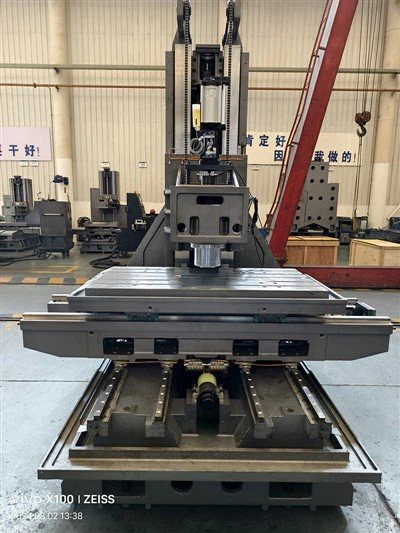
First, let’s get one thing straight: box way machines are different from linear rail ones. Yeah, linear rail is smoother, but box ways are built for heavy, rough cuts—they can take way more torque, but their feed rate sweet spot doesn’t work the same. I see a lot of new operators coming from linear rail setups cranking feed rates up on a box way and wondering why the spindle hums like it’s about to fall apart. That’s the first mistake. Don’t treat a box way like a soft linear rail machine. Got it? Good.
Start with the basics: know your machine’s limits. Every box way turning center I sell has a spec sheet that lists max feed rate (usually in inches per minute, IPM, or millimeters per minute, mm/min) and max thrust force. Wait, thrust force? Yeah, that’s the big one. Box ways carry the weight, but the cutting force pushing the tool into the part is what’ll kill them if you ignore it. Let’s say you’re turning a 4140 steel bar, 3 inches diameter, roughing cut with a carbide insert. I see new guys just pick a feed rate out of thin air. No. You need to work backwards from the tool, not the machine.
Let’s talk tools first, because feed rate and tooling are tied at the hip. If you’re using a roughing insert with a 0.030” nose radius, that’s different from a finishing insert with a 0.015” radius. Roughing inserts can handle way higher feed rates because they’re designed to chew through material. Finishing is all about surface finish, so you need a slower, more consistent feed. I usually tell operators: for roughing carbide inserts on steel, start at 0.010” per revolution (IPR) and go from there. For finishing? 0.003” to 0.008” IPR, max. And if you’re using a cermet insert for finishing, that can go a hair higher, but don’t push it—cermet is brittle.
Wait, let’s convert that to IPM because that’s what the control uses, right? IPM is IPR times spindle RPM. So if your spindle is turning at 500 RPM, and your feed is 0.010 IPR, that’s 5 IPM. That’s a solid starting point for roughing steel on a box way. If you try to go to 7 IPM, you better check your machine’s thrust rating. Most mid-sized box way turning centers (like the ones we sell for 10” to 20” diameter parts) have a max thrust of like 2,000 pounds. If you’re pushing 1,800 pounds at 7 IPM, that’s too much. You’ll hear the machine groan, and the ways will wear faster than you can say “I need a replacement way scraper.”
Next, material type. That’s non-negotiable. If you’re cutting aluminum, you can crank the feed way higher. Aluminum is soft, so inserts don’t take as much heat, and box ways love the light, fast cuts. For roughing aluminum, I’ve seen guys go 0.020” to 0.030” IPR—no problem. That translates to like 10 to 15 IPM at 500 RPM. But if you’re cutting stainless steel? Oh, buddy, slow down. Stainless work hardens, so too high a feed will make it work harden right in front of the insert, and then you’re chipping tools. For roughing stainless, stick to 0.008” to 0.012” IPR, max. That keeps the cutting edge sharp and avoids that work hardening.
Then there’s the cut depth. You can’t adjust feed rate in a vacuum—cut depth and feed rate work together. Box ways are built for heavy depths of cut, right? So if you’re taking a 0.200” deep roughing cut, your feed can be higher than if you’re taking a 0.050” deep cut. Wait, that’s counterintuitive, but here’s why: when you take a deeper cut, you’re removing more material per tooth (or per insert edge), so the feed per revolution can go up because the load is spread a bit more. If you take a shallow cut, all the force is concentrated on a smaller area, so lower feed. I test this all the time on our demo machines: take 0.150” deep on steel, feed 0.010 IPR works. Take 0.050” deep same steel, same insert, feed 0.008 IPR—any higher, and you get chatter. Chatter is the enemy on box ways, by the way. It’s that horrible vibration that leaves lines on the part and wears the insert way too fast. Feed rate is one of the biggest fixes for chatter, right after speed and depth.
Now, how to actually adjust it on the machine? Let’s get practical, because I know guys struggle with the control interface. Most box way turning centers we sell use Fanuc or Siemens controls, but even the old Haas box way models work similarly. First, go to the offset screen—no, not the work offsets, the feed rate override. Wait, the override is key. A lot of new operators just type in a random F-value in the program, but using the override lets you tweak it on the fly without changing the program. That’s smart, especially when you’re running a new part you haven’t done before. Start with that base feed rate we talked about (like 5 IPM for roughing steel), pull the override down to 50% first, run a test cut, then crank it up. Don’t go from 0 to 100% in one go. Do a 1” test cut on the scrap end of your bar, then stop and check the insert wear, the part surface, and listen to the machine. If it’s running smooth, no chatter, insert is still sharp, you can bump the override up 10% at a time. If you hear it groan or chatter, drop it 10% and leave it there.
Wait, what about rapid traverse? That’s not feed rate, that’s the G00 speed—don’t confuse the two. Feed rate is for cutting moves (G01, G71 roughing cycles), rapid is just moving the tool from point A to point B fast. Box ways can handle high rapid speeds, but don’t crank that up so much that you’re slamming the tool into the part. That’s a different issue, not cutting feed rate.
Another thing: lubrication. Box ways need way more way lube than linear rail machines, and that affects feed rate too. If your way lube pump is clogged or not working, the feed will be inconsistent, like it’s slipping. That’ll make you think you need to lower the feed rate, but really you just need to fix the lube system. I get service calls all the time for that—operators complain feed is “too fast and slow” and turns out the way lube is only dripping once a minute instead of every 10 seconds. Check that first before adjusting feed.
Also, machine age and condition. A 20-year-old box way turning center that’s got some wear on the ways can’t handle the same feed rate as a brand new one fresh out of our shop. If the ways are scored or the spindle has play, you have to run a lower feed rate to avoid chatter and further damage. I always tell guys with older machines to do a tramming check and way scraping first if they’re having feed rate issues—don’t just crank it down blindly.
Let’s run through a real example, because that helps. Last month, a customer called me panicking—he was running a brand new box way turning center from us, turning 12” diameter 4140 steel, roughing cut, getting chatter at 8 IPM. I asked him what insert he was using, he said a 0.030” nose radius roughing insert. What’s his spindle speed? He had it set at 500 RPM. Wait, that’s the first mistake. For that insert and material, spindle speed should be around 400 RPM for roughing, not 500. Then his feed per revolution was too high: at 500 RPM, 8 IPM is 0.016 IPR, way too much for roughing 4140 with that insert. I told him to drop the spindle to 400 RPM, lower the feed to 5 IPM, test cut. He did it, no chatter, insert lasted twice as long, cycle time only went up 2 minutes for a 10” part. That’s the sweet spot—adjusting speed and feed together, not just feed in isolation.
What about finishing cuts? Let’s say you’re finishing that same 4140 part, needs a Ra of 32 or lower. Feed rate is super important here. For finishing, you want a higher feed per revolution? Wait no, wait—smaller feed per revolution for better surface finish. Wait, let’s clarify: if your nose radius is 0.030”, the formula for surface finish is something like (feed per revolution squared) divided by (8 times nose radius). So lower feed per revolution = better finish. But if you go too low, you get built-up edge on the insert, especially on steel. So for finishing, 0.004” to 0.006” IPR is perfect for a 0.030” insert. At 1,200 RPM, that’s like 4.8 to 7.2 IPM. Run that test cut, and you’ll get a smooth finish without built-up edge.
Common mistakes I see all the time: first, ignoring feed per revolution and just messing with IPM. IPM is dependent on spindle speed, so if you change speed, IPM changes even if IPR stays the same. So always work in IPR for roughing and finishing, that’s the actual load on the tool. Second, not testing cuts. Everyone wants to crank the feed to get parts out faster, but a 1” test cut takes 30 seconds and saves you from ruining a $500 bar of steel. Third, not accounting for the box way’s strength. A box way machine is built for heavy cuts, but that doesn’t mean you can run it like a race car. Respect the ways—too high feed leads to way wear, which is way more expensive than a few extra minutes of cycle time.
Wait, what about if you’re using a multi-tool holder, like a turret with two inserts cutting at the same time? That doubles the load, so you have to lower the feed rate. I had a customer running a box way turning center with a double roughing insert, cranked the feed up to 10 IPM, and wore out the Z-axis ways in 3 months. He fixed it by dropping the feed to 7 IPM, and the ways are still good a year later. Multi-point cutting means more force, so lower feed.
So let’s wrap this up with a quick step-by-step, so you can reference it next time you’re adjusting feed rate:
- Know your machine: Check spec sheet for max thrust, feed rate limits. Box ways handle heavy cuts, not insane feed.
- Match tooling to material: Roughing carbide = 0.008-0.012 IPR for steel, higher for aluminum; finishing = 0.003-0.008 IPR, lower for harder materials.
- Account for cut depth and number of tools: Deeper cuts = higher feed, more tools = lower feed.
- Use test cuts: Start at 50% feed override, run a 1” test, check for chatter, insert wear, surface finish. Adjust 10% at a time.
- Don’t forget maintenance: Check way lube, machine condition before adjusting feed—slipping feed is almost always a lube issue, not speed.
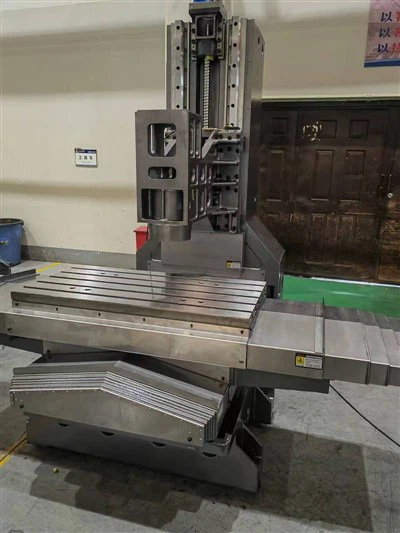
Now, if you’re running a box way turning center and still struggling with feed rate, or you’re in the market for a new machine that’s dialed in for consistent feed (no worn ways from cheap manufacturing), reach out to connect with our team. We work with job shops, aerospace parts makers, automotive suppliers—any shop that needs reliable turning centers that hold up to heavy cuts without constant issues. We’ll help you tune your feed rates for your specific parts, no sales pitch, just practical advice that actually gets results.
Double Column Machining Center Frame References:
- Machinery’s Handbook, 31st Edition: Metal Cutting and Tool Operation Principles. Industrial Press Inc.
- CNC Turning Technology: A Practical Guide for Operators and Programmers. SME (Society of Manufacturing Engineers)
- Box Way vs. Linear Rail Machine Tool Performance: Tribological and Machining Accuracy Analysis. International Journal of Machine Tools and Manufacture, 2019.
Smartech Machinery & Equipment Co., Ltd.
As one of the most professional box way turning center machine manufacturers and suppliers in China, we also support customized service. Please rest assured to buy bulk box way turning center machine made in China here from our factory. Contact us for more details.
Address: Room 2832, Changping Commercial Mansion, Shihua Road, Futian Free Trade Zone, Shenzhen, China
E-mail: smartech@smartechcnc.cn
WebSite: https://www.smartech-cnc.com/
