Alright, let’s cut to the chase—if you’re here because you’re either looking to haul heavy, bulky loads with a stake semi-trailer or just trying to make sure your drivers are actually qualified to not turn that $80k trailer into a roadside disaster, you’re in the right spot. I’ve been selling stake semi-trailers for going on 12 years now, and let me tell you, the number of people who skip the “proper training” part just to save a buck is wild. Last year alone, I saw three guys total lose a load because they didn’t know how to properly use the trailer’s stakes and rails—one was construction steel, another was landscaping logs, and the third… well, let’s just say they ended up with a load of fencing panels all over the interstate, and that wasn’t fun for anyone involved. Stake Semi-trailer

First off, let’s get one thing straight: a stake semi-trailer isn’t your standard dry van or flatbed. It’s got those removable vertical stakes and side rails that let you enclose partially or fully for loose, tall, or irregular loads—think lumber, pipes, construction materials, even bulky equipment parts. The training isn’t just “how to drive it” (that part’s similar to other semi-trucks, honestly) but how to operate and secure the trailer’s most unique parts, and the DOT (U.S. Department of Transportation, yeah, the one that does all the annoying inspections) has actual rules here. I’m not gonna bore you with jargon, but let’s break this down like I’m talking to a new driver who’s never touched a stake trailer before.
First, the basic commercial driver’s license (CDL) requirement. You can’t operate a stake semi-trailer without a Class A CDL, full stop. That’s non-negotiable. But here’s the thing: a regular Class A CDL doesn’t automatically qualify you for a stake trailer. Wait, no—wait, let me clarify that. The CDL itself covers the truck and trailer, but what most new drivers miss is the endorsements and hands-on-specific training that the DOT actually looks for. For example, if you’re hauling hazardous materials on a stake trailer, you need an H endorsement, but even if you’re hauling regular freight, the DOT requires that your driver knows how to secure the load specifically on a stake trailer. That’s the part most training programs gloss over, and it’s where I see the most mistakes.
Next, hands-on training that’s non-negotiable. A lot of new drivers think “I can look up how to use the stakes on YouTube” and then they show up to a job and can’t figure out how to tighten the side rails or when to use crossbars vs. vertical stakes. Let’s go through the key parts of this training, step by step, like I walk every new driver through it when they pick up a trailer from my lot.
First, familiarizing yourself with the trailer’s frame and stake system. Stake trailers come with either aluminum or steel stakes, right? Aluminum’s lighter, steel’s stronger, but both have locking pins that you have to pull to remove or adjust. Training has to cover how to identify which type of stakes your trailer has—because if you try to force a steel stake into an aluminum rail, you’ll strip it, and that’s a $200 repair bill you’ll have to foot. Also, the side rails: some stake trailers have sliding side rails, not just fixed ones, so you have to know how to adjust them to fit your load width. Last year, a driver from a small construction company tried to haul 12-foot steel beams on a trailer with fixed 10-foot rails, and he ended up having to cut the beams short because he didn’t know the rails didn’t slide. That’s a whole extra day of work he didn’t plan for.
Then, load securing—this is the big one. Stake trailers let you use a mix of tie-downs, crossbars, and the stake pockets to hold loads, but you can’t just toss a strap over a load and call it good. DOT requires that every load is secured to prevent shifting, and on a stake trailer, that means using the stake pockets to run tie-downs through, not just attaching them to the side rails (wait, don’t do that—side rails aren’t designed to hold heavy side loads, that’s what the stakes and frame are for). Training has to cover tie-down ratios, too: for loads over 10,000 pounds, you need at least one tie-down for every 10 feet of load length, but if it’s a tall load, you need extra horizontal tie-downs. I had a customer a few months back who tried to haul 20-foot PVC pipes on a stake trailer with only two tie-downs—needless to say, the state trooper pulled him over in Ohio and fined him $1,200. And fines like that? They’re not tax write-offs, trust me.
Also, securing the top and perimeter. A lot of drivers forget that stake trailers often need a tarp too, especially if you’re hauling loose material like gravel or mulch, or loads that could get wet. Wait, no—wait, even for lumber, a tarp protects it, but training has to cover how to secure the tarp to the stake system, not just the trailer’s corners. If you don’t attach the tarp to the stakes, it’ll blow off at 65 mph, and now you’ve got debris on the highway. I once had a driver call me in a panic at 2 a.m. because his tarp came loose on I-80, and he had to pull over for two hours to fix it—delayed his delivery, got a late fee, and almost hit a car that swerved to avoid the flapping tarp. That’s avoidable with proper training.
Now, what about ongoing training? It’s not a “one and done” thing. DOT requires that commercial drivers get refresher training every 3 years, but for stake semi-trailer operation, I’d argue that’s too long. Every time a driver gets a new trailer (even from my lot—we include a 30-minute walkthrough for every driver who picks up a trailer from us), or every time they’re going to haul a new type of load (like a driver who usually hauls lumber trying to haul heavy equipment), they need a quick refresh. Last year, I had a long-time customer whose driver switched from lumber to steel beams and didn’t know that steel beams need vertical stakes at every 8 feet, not every 10. He only used three stakes, and the beams shifted—cracked the trailer’s side rail, which cost $1,500 to repair. That’s money he could’ve avoided spending if he’d just sat down for a 15-minute training session on that specific load.
Wait, let’s talk about common mistakes I see drivers make because they skip training. Number one: forcing stakes into the pockets. Stakes aren’t meant to be hammered in—you pull the locking pin, align the stake, and let it drop. If you hammer them, you’ll bend the pin, and then the stake won’t lock, which means it can come loose mid-drive. Number two: using the wrong tie-down points. I already mentioned this, but it’s worth repeating—never tie a strap to the side rails. Those are for support, not load securing. Number three: not checking the stake system before every trip. A quick pre-trip inspection (which is part of training) means pulling each stake to make sure the lock works, checking for bent pins, and making sure all side rails are tight. You’d be surprised how many drivers skip that and end up with a stake falling out on the road.
Now, let’s get to the “official” side of this, because I know some of you care about that. The DOT’s Federal Motor Carrier Safety Administration (FMCSA) has specific rules for commercial vehicle operation, and stake semi-trailers fall under that umbrella. FMCSA doesn’t have a separate certification for stake trailers, but they do require that your driver has the knowledge and skills to operate the trailer’s unique features, and that means either formal training from an accredited provider or on-the-job training that’s documented. A lot of trucking companies skip the formal stuff and just have a senior driver show the new guy, but that’s risky—if that senior driver learned bad habits, the new guy does too. My advice? If you’re a small fleet owner, spring for a day-long training session for all your drivers when you add new stake trailers. It’s way cheaper than fixing a load or paying a fine.
And let’s not forget about safety. Operating a stake semi-trailer isn’t just about following rules—it’s about not hurting people. A load that shifts or a stake that comes loose can cause a catastrophic accident. I’ve seen photos of a stake trailer’s side rail that broke on the highway, sending a 20-foot pipe through a nearby car’s windshield. That’s a death. Proper training isn’t just a box to check—it’s keeping your drivers, other motorists, and your business safe.
Now, if you’re someone who’s looking to buy a stake semi-trailer (hey, that’s my line of work, so I’m here for it) and you’re worried about getting your drivers trained, or if you’re a driver who wants to brush up on your skills, let’s talk. I’ve worked with training providers that do on-site sessions for fleets, and I can point you to the right resources—no pushy sales stuff, I promise. But here’s the thing: training isn’t optional if you want to run a successful, safe stake semi-trailer operation. I’ve seen too many small businesses go under because they cut corners on training, and I don’t want that for anyone.
Wait, quick wrap-up to make sure I didn’t miss anything. To operate a stake semi-trailer, you need: a valid Class A CDL, basic load securing knowledge, hands-on training specific to stake trailer stakes, rails, and tie-down systems, and ongoing refresher training. Skip any of that, and you’re setting yourself up for trouble. I’ve been in this industry long enough to know that the best operators aren’t the ones who cut costs—they’re the ones who invest in training, because that investment pays off in fewer breakdowns, fewer fines, and a whole lot less stress.
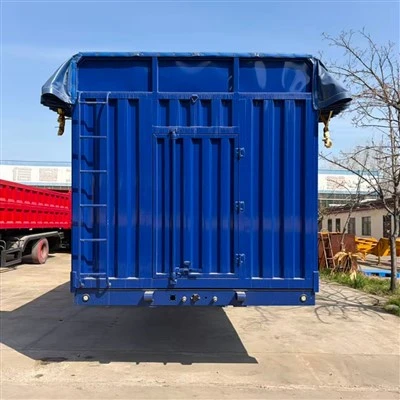
If you’re ready to talk about what kind of stake semi-trailer fits your hauling needs, or if you want more info on training resources that work with our equipment, don’t hesitate to reach out. I’m here to help you get set up right, no confusing jargon, no hidden fees. Let’s make sure your first (and every) haul on a stake semi-trailer goes smooth.
Low-bed Semi-trailer References:
Federal Motor Carrier Safety Administration (FMCSA). "Commercial Driver’s License (CDL) Program Requirements." FMCSA, 2024.
National Institute for Occupational Safety and Health (NIOSH). "Truck Driver Safety: Load Securing and Vehicle Operation." NIOSH, 2023.
American Trucking Associations (ATA). "Stake Semi-Trailer Operation & Load Securing Guide." ATA, 2022.
Jining Yaochi Automobile Trading Co., Ltd.
With abundant experience, we are one of the most professional stake semi-trailer manufacturers in China. Please feel free to buy cheap stake semi-trailer made in China here from our factory. Quality products and reasonable price are available.
Address: Liangshan Industrial Park, Jining City, Shandong Province, China
E-mail: Yzhiying23@gmail.com
WebSite: https://www.yaochitruck.com/
