In the realm of automotive suspension systems, the semi – trailing arm suspension stands out as a design that offers a balance between comfort and handling. At the heart of this suspension arrangement is a component that is both unassuming yet crucial: the ball joint. As a leading ball joint supplier, I’ve had the privilege of delving deep into how these components operate within a semi – trailing arm suspension, and I’m excited to share this knowledge with fellow automotive enthusiasts, engineers, and industry professionals. Ball Joint
Understanding the Semi – Trailing Arm Suspension
To fully grasp how a ball joint functions in a semi – trailing arm suspension, we must first understand what a semi – trailing arm suspension is. This type of suspension is commonly found in the rear axles of many vehicles, especially those that aim to provide a smooth ride.
The semi – trailing arm suspension consists of one or more trailing arms that are attached to the vehicle’s chassis and the wheel hub. These arms are positioned at an angle to the direction of travel, typically between 30 and 60 degrees. This angle allows the suspension to handle vertical and lateral forces effectively. When the wheel encounters a bump, the semi – trailing arm moves both vertically and slightly horizontally. This combination of movements helps to absorb the shock and maintain tire contact with the road.
The Role of the Ball Joint
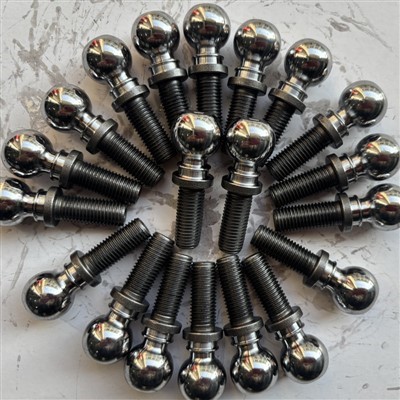
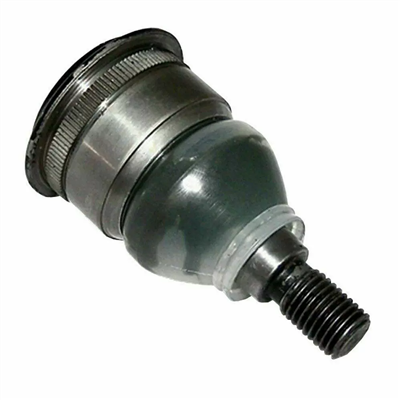
The ball joint is a spherical bearing that enables the connection between the semi – trailing arm and other components, such as the wheel hub or the chassis. Its primary function is to provide a pivot point that allows for the smooth and controlled movement of the semi – trailing arm.
Permitting Multi – Directional Movement
One of the most important aspects of a ball joint is its ability to facilitate multi – directional movement. In a semi – trailing arm suspension, the trailing arm needs to move in multiple planes as the vehicle maneuvers. The ball joint allows the arm to move up and down, side to side, and at various angles in between. This fluid movement is essential for the suspension to adapt to different road conditions and driving situations.
For example, when the vehicle takes a turn, the semi – trailing arm experiences lateral forces. The ball joint enables the arm to pivot and adjust to these forces, helping to maintain proper wheel alignment and stability. Similarly, when the vehicle hits a bump, the ball joint allows the arm to move vertically, absorbing the impact and preventing it from being transferred directly to the vehicle’s body.
Transmitting Forces
Another crucial role of the ball joint is to transmit forces between the semi – trailing arm and the rest of the suspension system. As the semi – trailing arm moves, it generates forces that need to be transferred to the wheel hub and ultimately to the tire. The ball joint acts as a bridge, ensuring that these forces are transmitted efficiently and accurately.
The forces acting on a ball joint in a semi – trailing arm suspension can be quite complex. They include vertical forces from the weight of the vehicle and the impact of bumps, lateral forces during cornering, and longitudinal forces during acceleration and braking. A well – designed ball joint is able to withstand these forces without compromising its functionality.
Construction and Design of Ball Joints for Semi – Trailing Arm Suspensions
The effectiveness of a ball joint in a semi – trailing arm suspension depends largely on its construction and design.
Ball and Socket Design
The most common design of a ball joint used in automotive applications is the ball – and – socket design. A hardened steel ball is housed within a socket that is lined with a low – friction material, such as polyurethane or nylon. This design allows for smooth rotation and movement of the ball within the socket.
The ball is typically attached to one part of the suspension, such as the semi – trailing arm, while the socket is attached to another component, like the wheel hub. The ball and socket are precision – engineered to fit together perfectly, ensuring a secure yet flexible connection.
Sealing and Lubrication
To ensure long – term performance, ball joints need to be properly sealed and lubricated. The sealing mechanism prevents dirt, water, and other contaminants from entering the joint, which could cause wear and damage over time. Most ball joints are equipped with a rubber or plastic boot that acts as a protective barrier.
Inside the joint, a high – quality lubricant is used to reduce friction and wear between the ball and the socket. This lubricant helps to maintain smooth operation and extends the lifespan of the ball joint.
Maintenance and Replacement of Ball Joints in Semi – Trailing Arm Suspensions
As a ball joint supplier, I know that proper maintenance and timely replacement of ball joints are crucial for the safety and performance of a vehicle’s semi – trailing arm suspension.
Signs of Wear
There are several signs that indicate a ball joint in a semi – trailing arm suspension may be worn or damaged. These include uneven tire wear, a clunking or rattling noise when going over bumps, and a change in the vehicle’s steering or handling characteristics. If any of these symptoms are noticed, it is important to have the ball joints inspected by a qualified mechanic.
Replacement Process
Replacing a ball joint in a semi – trailing arm suspension is a complex task that requires specialized tools and knowledge. In most cases, the semi – trailing arm needs to be removed from the vehicle to access the ball joint. The old ball joint is then pressed out, and a new one is installed.
It is important to use high – quality replacement ball joints to ensure the continued performance and safety of the suspension system. As a ball joint supplier, I can attest to the fact that the quality of the ball joint can have a significant impact on the overall performance of the semi – trailing arm suspension.
Why Choose Our Ball Joints
When it comes to sourcing ball joints for semi – trailing arm suspensions, there are several reasons why you should choose our products.
Quality and Durability
Our ball joints are manufactured using the highest – quality materials and the latest manufacturing techniques. We use hardened steel for the ball and socket, and our seals and lubricants are designed to withstand the harsh conditions of automotive use. This ensures that our ball joints offer long – term durability and reliable performance.
Precision Engineering
Each of our ball joints is precision – engineered to meet or exceed OEM specifications. This means that they fit perfectly into the semi – trailing arm suspension, providing a smooth and stable connection. Our strict quality control measures ensure that every ball joint that leaves our facility meets the highest standards of quality.
Technical Support
As a ball joint supplier, we don’t just sell products; we also offer comprehensive technical support. Our team of experienced engineers is available to answer any questions you may have about our ball joints, installation, or maintenance. We can provide you with detailed technical information and assistance to help you make the best choice for your application.
Conclusion
In conclusion, the ball joint is a critical component in a semi – trailing arm suspension, enabling the smooth and controlled movement of the trailing arm and the efficient transmission of forces. Understanding how a ball joint works in this context is essential for anyone involved in the automotive industry, whether you’re an engineer, a mechanic, or a vehicle owner.
Anti-roll Bar Ball Joint If you’re in the market for high – quality ball joints for your semi – trailing arm suspension, we invite you to get in touch with us. Our team is ready to discuss your specific requirements and provide you with the best solutions. Contact us today to start a conversation about how our ball joints can enhance the performance and reliability of your vehicles.
References
- Milliken, W. F., & Milliken, D. L. (1995). Race Car Vehicle Dynamics. SAE International.
- Gillespie, T. D. (1992). Fundamentals of Vehicle Dynamics. Society of Automotive Engineers.
- Haines, A. (2005). The Automotive Chassis: Engineering Principles. Butterworth – Heinemann.
Taizhou Huazhe Auto Parts Co., Ltd.
As one of the most professional ball joint manufacturers and suppliers in China, we’re featured by quality products and low price. Please rest assured to buy bulk high-grade ball joint in stock here from our factory. For pricelist, contact us now.
Address: No. 2828, Binkang Avenue, Sanjia Street, Taizhou Bay New Area, Taizhou City, Zhejiang Province
E-mail: 19906762800@163.com
WebSite: https://www.huazheindustry.com/
